

What is protein and what does it do in the body?
Protein is an important nutrient and is sometimes called the body’s building blocks. You need it to build and repair tissues, and it’s part of enzymes, hormones, and the immune system. Protein is made up of long chains of amino acids, a bit like beads on a necklace. Nine of these are essential amino acids, meaning your body can’t make enough of them on its own, so you need to get them through food.
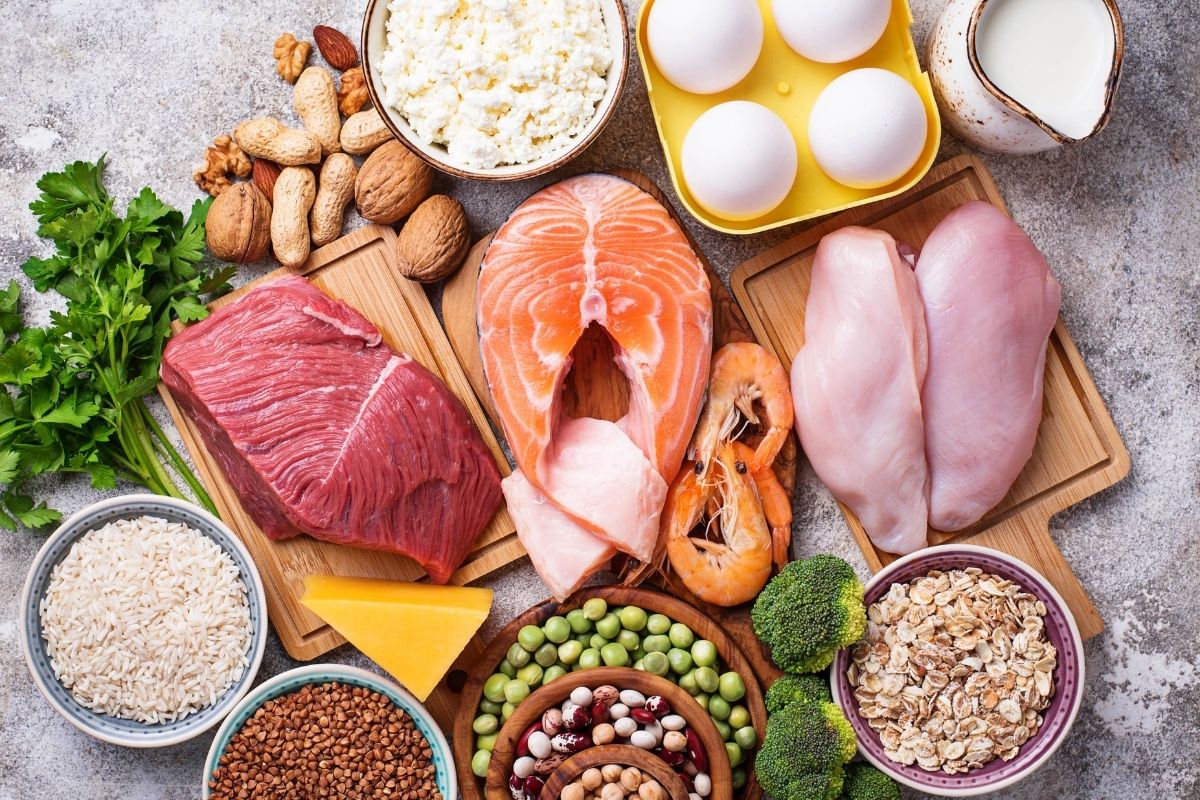
Protein is found in lots of different foods, both animal and plant-based. Examples of foods high in protein include meat, chicken, fish, seafood, eggs, beans and lentils, plus lower-fat dairy like yoghurt, quark, and cottage cheese.
Why protein matters for weight loss
Protein can make weight loss feel a bit easier in a few ways, for example by helping you:
- Feel fuller: Protein is the nutrient that tends to keep you most satisfied per calorie. Studies show that meals higher in protein can stimulate the release of several “fullness hormones” such as GLP-1, CCK and PYY. That usually means you feel full sooner and stay full for longer. In one study, when people increased the protein share of their diet from around 15% to 30% of calories, they naturally ate about 440 fewer calories per day on average.
- Maintain muscle: When you lose weight, you often lose both fat mass and fat-free mass, including muscle. A higher protein intake, especially alongside strength training, can help you keep more muscle during a calorie deficit. That matters for strength and day-to-day function, and it can help stop your metabolism dropping more than it needs to.
- Use a bit more energy digesting food: Protein takes a little more energy for the body to break down and process than carbohydrates and fat. This is called the thermic effect of food (TEF). The effect is small, but over time it can contribute slightly in the right direction.
How much protein is “enough” per day?
Your protein needs vary depending on things like age, activity level and health. For healthy adults, European and Nordic guidelines suggest around 0.83 g of protein per kg of body weight per day. Most people reach this through a varied diet, because protein is found in so many foods.
Older adults tend to need more and are often recommended 1.1 to 1.2 g/kg/day to help reduce muscle loss. During illness, low appetite, rehabilitation, or weight loss, needs can increase further, up to around 1.5 g/kg/day.
Protein intake for weight loss
Meeting your basic protein needs doesn’t always mean your intake is best matched to your goal. If you want to lose weight, you train, and you’re aiming to improve body composition, a higher protein intake can be helpful.
In a calorie deficit, higher protein intake has been linked in several studies to better outcomes, such as reductions in body weight and fat mass, while keeping more fat-free mass.
For people doing strength training while eating fewer calories, extra protein can help protect muscle and support body composition. In one study where participants ate around 30% fewer calories, researchers compared 0.8, 1.6 and 2.4 g/kg/day. Those eating the least protein lost the most weight overall, but also lost the most muscle. Those eating more protein lost mainly fat, while keeping more muscle.
Because of this, the International Society of Sports Nutrition recommends around 1.4 to 2.0 g/kg/day for people who train, and notes that higher levels may be needed during a calorie deficit to better preserve fat-free mass.
For people living with overweight or obesity, using body weight to set a protein target can sometimes lead to a number that feels disproportionately high and not very realistic day to day. Newer research suggests that at least 1.3 g/kg/day can be seen as a lower level that may help with maintaining muscle during weight loss.
Are there risks to eating a lot of protein?
In healthy people who train, there isn’t clear scientific evidence at the moment that a higher protein intake harms the kidneys or liver. Concerns about high protein often come from people with kidney disease, where protein sometimes needs to be limited. If you have reduced kidney function or kidney disease, speak to your doctor before increasing your protein intake.
One risk with an excessively high protein intake is that your diet can become a bit one-sided, meaning you might miss out on other important nutrients like fibre, vitamins and minerals. A high protein intake can also mean eating a lot of red meat and processed meats, which has been linked to a higher risk of bowel cancer and also has a larger climate impact than many other protein sources. So it’s sensible to keep these in moderation and vary your protein sources with options like beans and lentils, fish, and dairy.
Eating more protein: practical tips
- Start the day with protein: Try an omelette with cottage cheese, banana pancakes made with egg and banana, quark, or Greek-style yoghurt higher in protein with granola. You can also mix protein powder into porridge or a smoothie.
- Smart snacks: Prep boiled eggs, hummus with veg sticks, a smoothie, or cottage cheese/quark with berries.
- Eat smaller meals more often: Regular, smaller meals high in protein can make it easier to reach your protein for the day.
- Add more pulses: Mix beans or lentils into salads, soups, stews, tacos or pasta sauce. Try swapping some of the mince in a bolognese for lentils. Pulses often contain both protein and fibre, which can help a meal feel more filling.
- Build your plate around protein: Have a larger portion of protein on your plate and vary it with more plant-based meals, fish and seafood.
- Protein-based dips and sauces: Use quark, Greek-style yoghurt, or blended cottage cheese as a base for cold sauces. Mix in herbs, garlic or pesto. Hummus and other bean dips also work well as a spread, dip or side.
- Drink your protein: Protein powder can be a useful add-on and an easy way to increase protein intake.
Pair a diet higher in protein with strength training
A diet higher in protein tends to work best when you combine it with strength training. Training tells your body to build or keep muscle, and protein provides the building blocks needed.
Aim for strength training 2 to 3 times per week. Exercises that use large muscle groups, such as squats, deadlifts, presses and rows, are especially effective for building strength and muscle. With regular training, a balanced diet and enough protein per day, you give yourself the best conditions for sustainable, effective weight loss.
Summary
Food higher in protein can be a useful tool during weight loss, especially if you want to maintain muscle while reducing fat mass. Protein can help by increasing fullness, which can make a calorie deficit feel more manageable. It also supports body composition and helps you maintain muscle, strength and function during weight loss, particularly when combined with strength training. The right amount of protein varies from person to person, but if you’re trying to lose weight while keeping muscle, your protein target is often higher than general guidelines.
.svg)