
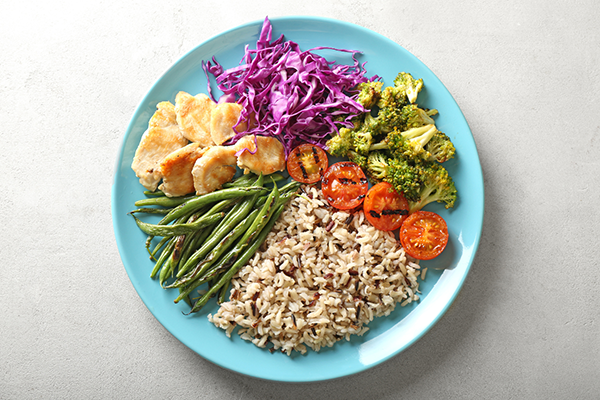

The plate model in brief:
- The plate model is a helpful tool for creating more balanced and nutritious meals. It shows how you can divide your plate between vegetables, carbohydrates, and a smaller portion of protein-rich foods. By letting vegetables, root vegetables, fruit, and berries take up a large share of the plate, you increase your intake of fibre, vitamins, and minerals — all of which support long-term health.
- The model is easy to adapt to your needs. If you are physically active, you can increase the portion of carbohydrate-rich foods such as potatoes, pasta, bread, or rice. If you instead want to reduce your energy intake, you can let vegetables and root vegetables make up a larger part of the plate.
- The plate model provides clear guidance on how to compose your meals in a simple way that works in everyday life, wherever you eat. It helps you achieve a good balance of nutrients, ensuring you get an appropriate amount of everything your body needs.
The three components of the plate model
The plate model is divided into vegetables, carbohydrates, and protein — with vegetables usually making up the largest portion of the plate, followed by carbohydrates and protein. You typically obtain enough fat through the foods you eat during the day, which means it is often unnecessary to add extra fat to the meal.
The plate model is based on dividing the plate into three sections:
• vegetables and root vegetables
• potatoes, pasta and bread
• meat, fish, eggs and other protein-rich foods
Eating more vegetables
According to the plate model, half of the plate should be filled with vegetables and root vegetables if you are less physically active, want to lose weight, or maintain your weight. For those who are more active, around one third of the plate is recommended to consist of vegetables. Vegetables provide flavour, vitamins, minerals, and fibre — all of which support your overall health.
Carbohydrates – potatoes, pasta, bread
In the plate model, carbohydrates make up slightly more than a quarter of the plate for those who are less active. For those who are more active, the carbohydrate portion should be roughly the same size as the vegetable portion. This section includes foods such as potatoes, pasta, bread, and other starchy foods. These foods provide energy to help you manage your daily activities.
Protein – meat, poultry, fish
The final and usually smallest section of the plate consists of protein. According to the plate model, slightly less than a quarter of the plate should contain protein-rich foods such as meat, fish, eggs, and legumes. Protein is essential for the body’s functions because it helps build and repair cells, muscles, and tissues. It also plays a role in metabolism and is important for immune function. Including protein in each meal contributes to increased satiety, helping regulate appetite and support sustainable long-term weight management.
A tool – not a diet
Eating according to the plate model is a simple way to achieve a good balance between different food groups and ensure your body gets what it needs. The model suits both those who are physically active and those who simply want more balanced meals in everyday life. By varying your vegetables, protein sources, and carbohydrate options, you can create countless meals that are delicious, well-balanced, and nutritious.
How does the plate model work with Yazen?
The plate model can be a helpful guide during weight-loss treatment with medication. It supports balanced meals and is easy to adapt to the routines and habits you develop during your treatment with Yazen.
If you want to read more about different ways of eating, we recommend our article series on popular diets.
.svg)