Getting the right support with the obesity pill is essential
New oral treatments could lower the barrier to obesity care and make treatment accessible to more people.


The obesity pill is coming, but the right support will matter more than ever
New oral treatments could lower the barrier to obesity care and make treatment accessible to more people. But according to endocrinologist and Yazen founder Martin Carlsson, good medical support will become even more important as the number of treatment options grows. “It’s not about finding the strongest drug. It’s about finding the right treatment for the right patient.”
For Martin Carlsson, the arrival of an obesity pill is important, but it is not a revolution. That happened four or five years ago, with the arrival of GLP-1 medications. “Before that, there was actually very little we could offer patients as doctors,” he says. “There was bariatric surgery, of course, but apart from that we mainly had lifestyle advice. And for many patients, that simply wasn’t effective enough.”
GLP-1 medication changed that. Suddenly, Carlsson was seeing patients who had struggled with their weight for years lose tens of kilos. “For some people, it gave them a completely new life.” He does not expect the Wegovy pill now heading towards the European market to have the same revolutionary impact. The idea of oral semaglutide itself is not new either.
“We have known the active substance, semaglutide, for years. More than 4,500 patients within the Yazen programme have already used semaglutide, including in tablet form. What is new is that Novo Nordisk has developed a higher-dose tablet specifically for obesity. And patients will soon have more choice.”
That choice will look different for every patient, Carlsson says. “Some people will be very happy to move away from injections. Others may find after a while that a weekly injection suits them better and switch back. There may also be situations where someone changes temporarily, for example during a longer trip.”
A pill designed to be a pill
At the same time, Eli Lilly has developed orforglipron, a drug with a different chemical structure that does not have to be taken on an empty stomach. “That is not simply an existing drug turned into a tablet,” says Carlsson. “It was designed from the outset as a pill, which makes it particularly interesting.”
Exactly when both new pills will become available in the Netherlands is not yet clear. What matters more to Carlsson is that tablets could make treatment feel more accessible to people who might otherwise be reluctant to seek help. Men are one example. “About three-quarters of Yazen’s patients are women, even though obesity is certainly not a women’s issue. If taking a tablet makes it easier for more men to seek treatment, that would be a very positive development.”
At the same time, Carlsson stresses that “a prescription is not the same as treatment”. Two patients can respond very differently to exactly the same medication. “I have patients who respond extremely well to a very low dose, while somebody else needs much more. You really have to look at the individual in front of you.” And weight is only one part of that assessment. Does the patient have diabetes or fatty liver disease? Is there an increased cardiovascular risk? Are they experiencing significant side effects? Are they losing too much muscle mass? And does a daily pill fit their life better than a weekly injection? “Obesity is not the same disease in every patient.”
Support matters
That is why ongoing support becomes more important, not less, as more medications become available. “You need to keep monitoring how someone responds, whether there are side effects, what happens to their hunger and whether the treatment still fits their needs. Sometimes you need to adjust the dose. Sometimes you need to switch medication.”
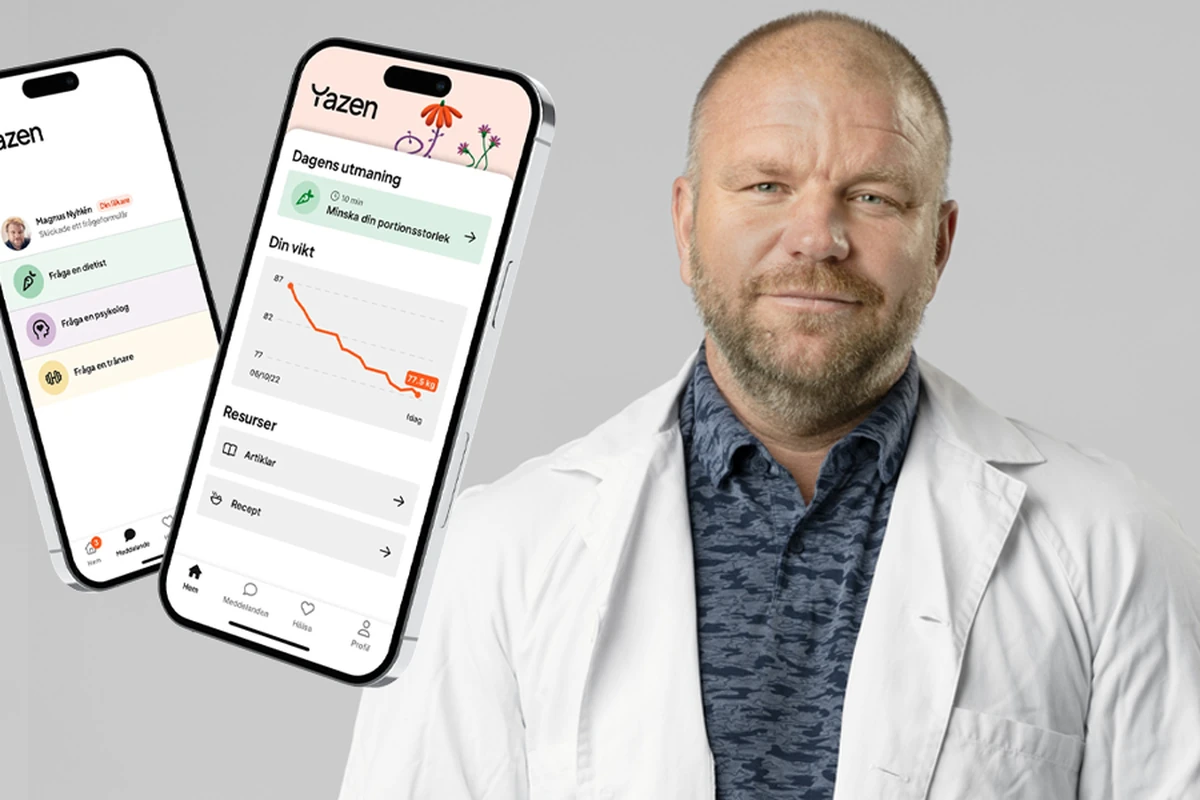
Within the Yazen programme, this support is provided not only by doctors, but also by dietitians, psychologists, physiotherapists and health coaches.
Nutrition and physical activity remain an important part of treatment too. People who eat considerably less because of medication need to pay particular attention to protein, fibre, vitamins and minerals. Significant weight loss can also lead to a loss of muscle mass.
Yet this kind of long-term support is not always easy to access, according to Yazen data. Twelve per cent of patients had previously sought help from their GP but said they had received insufficient support with lifestyle changes, dosage or side effects. A further 22 per cent did not see their GP as a realistic option for getting help with their weight at all.
For Carlsson, the issue is therefore not only about access to medication. It is also about helping patients stay in treatment.
Research shows that only 27 per cent of GLP-1 users without structured support are still receiving treatment after twelve months. Within Yazen, that figure is 69 per cent.
“Medication alone can absolutely help someone lose weight,” Carlsson says. “But ultimately you want people to be able to sustain the treatment and become healthier in the long term.”
The future of obesity treatment
Five years from now, Carlsson expects obesity care to offer even more choice and become increasingly personalised.
One patient may prefer a daily pill, another a weekly injection. New treatments will last longer, while others will combine several biological mechanisms in a single medication.
As a result, the question will increasingly shift from which drug works best? to which treatment works best for this particular patient?
Digital healthcare can play an important role in following patients over time, Carlsson says, with doctors, dietitians, psychologists and coaches each contributing their own expertise.
But in his view, the biggest change will not come from the next pill or injection. It will come from the way society thinks about obesity.
“Nobody tells a person with high blood pressure that they are cheating because they take medication. Unfortunately, we still hear that kind of language when it comes to obesity.”
“When we look back ten years from now, I hope we won’t say: that was when the miracle pill arrived. I hope we’ll say: that was when we finally started treating obesity as the chronic disease it is.”