Venous insufficiency and obesity
Overweight and obesity are associated with an increased risk of venous problems and chronic venous disease, which can cause swollen, heavy legs. Several factors may contribute to this link, including increased pressure within the abdomen and factors that affect the calf muscle pump and venous blood flow. For people living with overweight or obesity, weight loss may form part of the overall treatment and help reduce venous symptoms.
When blood struggles to return to the heart – how venous insufficiency develops
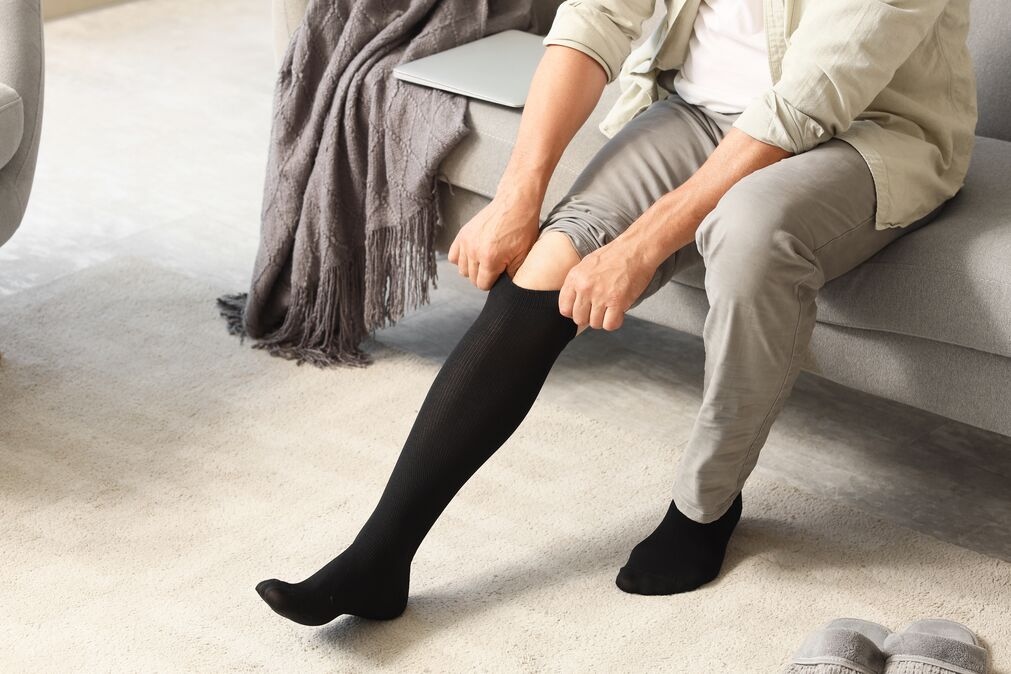
Venous insufficiency occurs when blood doesn't flow back from the legs to the heart as effectively as it should. A common cause is that the valves in the leg veins no longer close properly, allowing some blood to flow backwards and increasing pressure inside the veins. Obstructions to venous blood flow can also contribute.
To move blood from the legs back to the heart, the vein valves work together with the leg muscles. When you walk or move your legs, the muscles squeeze the veins and help push blood upwards, while the valves prevent it from flowing back down.
If this system doesn't work efficiently enough, pressure inside the veins can remain elevated. Chronic venous disease may lead to visible or enlarged veins, swelling, and skin changes on the lower legs. In more advanced cases, the skin around the ankles may become brownish in colour, dry, or itchy. Eczema-like skin changes may also occur.
Persistently raised venous pressure can also contribute to inflammation and changes in the skin and underlying tissue. In more advanced chronic venous insufficiency, slow-healing venous leg ulcers may develop. New or worsening skin changes or ulcers on the lower legs should therefore be assessed by a healthcare professional.
Swollen legs can also have many causes other than venous insufficiency. New, one-sided, or severe swelling should always be assessed by a healthcare professional.

How can obesity affect blood flow from the legs?
In obesity, a large amount of abdominal fat can increase pressure within the abdomen, which may affect venous blood flow from the legs back to the heart.
At the same time, factors such as reduced physical activity and decreased activation of the calf muscle pump can further impair venous return. Over time, this may contribute to or worsen venous symptoms such as swelling, a feeling of heaviness, and varicose veins.
Obesity is therefore an important risk factor for chronic venous disease, but it isn't the only cause. Increasing age, family history, previous blood clots, and prolonged standing or sitting can also play a role.
Can weight loss improve symptoms of venous insufficiency?
For people living with overweight or obesity and venous insufficiency, weight loss may form part of the overall treatment plan.
A lower body weight can reduce the strain on the legs while also making it easier to stay physically active. When the leg muscles are working, they act as a pump that helps move blood back towards the heart, which may improve venous return and reduce swelling.
The extent to which symptoms improve varies from person to person and depends, among other things, on the severity of the venous disease. Weight loss doesn't replace other treatments for venous insufficiency, but it can form part of a broader treatment plan alongside physical activity and, where appropriate, compression therapy or other medical treatments.
Can medical weight management be relevant for obesity and venous insufficiency?
For people living with obesity, medical weight management may be an option when lifestyle changes alone haven't been sufficient. GLP-1-based medications can reduce appetite and increase feelings of fullness, helping people achieve clinically meaningful and sustained weight loss.
Medical weight management isn't a treatment for venous insufficiency itself. However, for people who also have obesity, weight loss can reduce the strain on the body and make it easier to stay physically active, which may benefit venous blood flow.
At the same time, venous insufficiency should be assessed and treated according to the symptoms and severity of the condition.

Frequently asked questions (FAQ)
Can overweight and obesity cause swollen legs?
Overweight and obesity can contribute to swollen legs by affecting venous blood flow and increasing pressure within the veins. However, swollen legs can have many other causes, including heart, kidney, or liver disease, medication, or blood clots. New or significant swelling should therefore be assessed by a healthcare professional.
Can weight loss improve venous insufficiency?
For people living with overweight or obesity and venous insufficiency, weight loss may help reduce venous symptoms. A lower body weight can reduce factors that place extra strain on venous blood flow while making it easier to stay physically active. The degree of improvement varies and depends, among other things, on the severity of the venous disease.
Why do legs often become more swollen in the evening?
When you sit or stand during the day, gravity affects the return of blood from the legs. In venous insufficiency, this return flow is less effective, causing pressure within the veins to increase and fluid to build up in the tissues. As a result, swelling and a feeling of heaviness often become more noticeable later in the day.
Can GLP-1 medications treat venous insufficiency?
No. GLP-1-based medications aren't treatments for venous insufficiency. However, for people who also have obesity, they may be used as part of medical obesity treatment to support weight loss. Weight loss may, in turn, reduce the strain on the body and make it easier to stay physically active.
When should I seek medical advice for swollen legs?
Recurring swelling, skin changes, or wounds that don't heal should be assessed by a healthcare professional. Sudden swelling in one leg, especially if accompanied by pain, tenderness, warmth, or redness, may be a sign of deep vein thrombosis (DVT) and should be assessed urgently. If you experience shortness of breath or chest pain, seek emergency medical attention immediately.

This is how you can start today

Sign up through our website
Answer a few questions within 2 minutes so we can better understand you and your goals. To submit your responses, securely log in using iDIN. This is a trusted online identification method that allows you to easily confirm your identity and age. Want to learn more about iDIN? Click here for more information.


Download the Yazen app
Continue your journey in our app. Download the Yazen app from the App Store or Google Play, and log in to get started right away.
Complete your health profile
Together with your YazenCoach, you'll answer a few more questions in the app to complete your profile.
Plan your blood test
To determine if you’re eligible for the treatment, we conduct a comprehensive blood test. We partner with Labplusarts, the leading provider of blood tests. You can easily request a blood test through their website, and you'll always find a location nearby.
*If the test results indicate that the treatment is unsuitable, you’ll receive a refund for the blood test cost (€119).
Discuss your treatment plan
If the blood test results show that the treatment is suitable for you, you’ll meet your doctor. Together, you’ll create a personalised treatment plan tailored to your needs.
Your journey can begin!
If you’re satisfied with the treatment plan, the costs, the medication, and the expected results, we can get started.