Key Takeaways from the Economist Enterprise Obesity & Metabolic Health Summit 2026
Key Takeaways from the Economist Enterprise Obesity & Metabolic Health Summit 2026

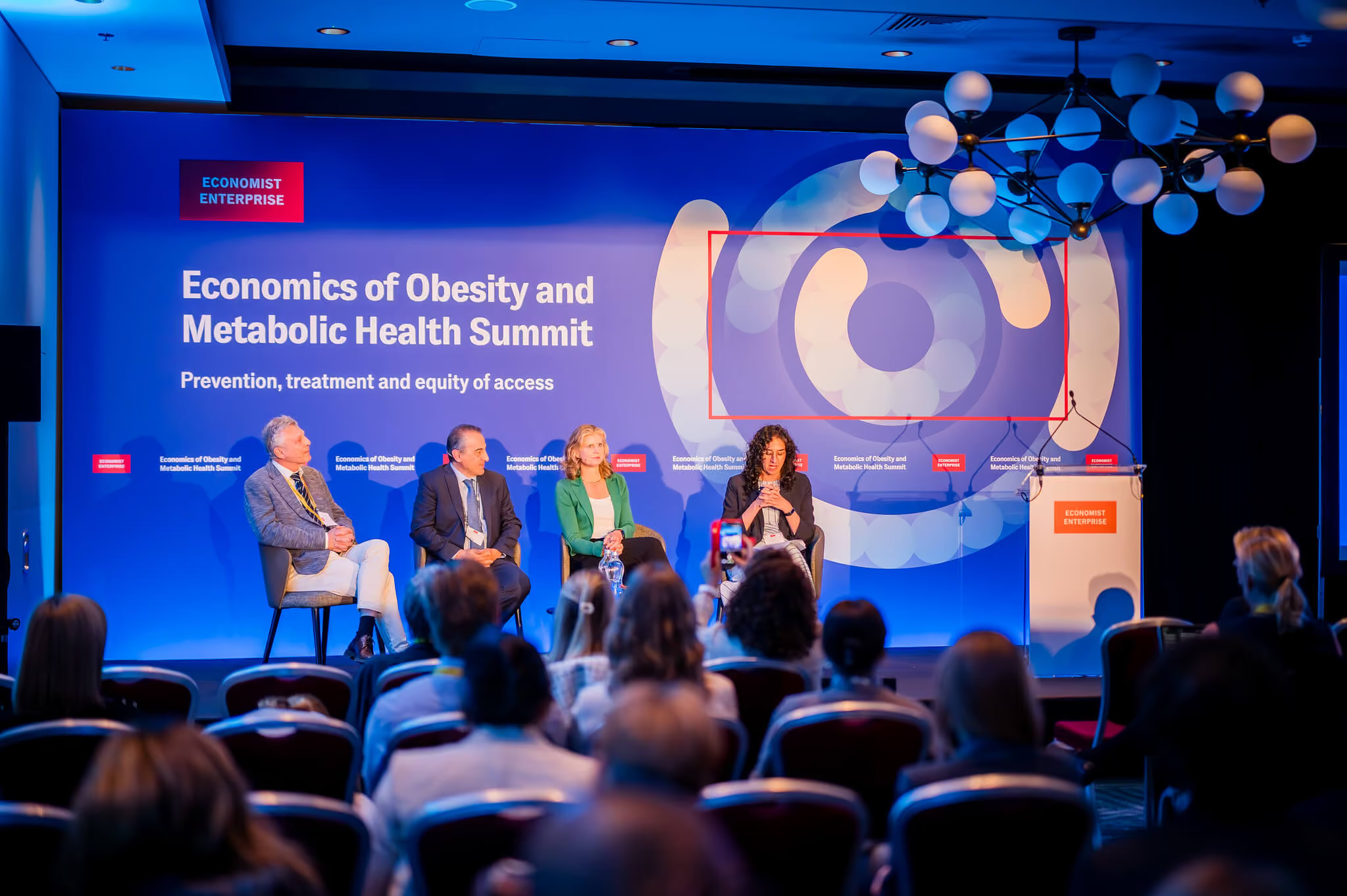
The Economist Enterprise Obesity & Metabolic Health Summit, held in Brussels on 10 June 2026, gathered a diverse coalition of global policymakers, clinicians, patient advocates, employers, and healthcare leaders. The core mandate of the summit was undeniable: Europe is facing an escalating metabolic crisis that requires an immediate, systemic transition away from reactive, siloed treatments toward long-term, proactive care.
As a digital healthcare provider specialising in comprehensive obesity care, Yazen attended the summit to engage with these critical discussions with both our founder and Yazen patient joining panels to share their expertise and experience. The insights shared in Brussels strongly align with our own clinical findings and reinforce our mission to treat obesity as a complex biological disease, not a character flaw.
Here are the key themes and opportunities from the summit, and how they connect to the real-world data we are seeing across Europe.
1. The Financial and Human Burden of Obesity
Speakers repeatedly stressed that obesity is a chronic, progressive disease creating unsustainable pressure on healthcare systems and national economies.
- Economic Impact: The summit highlighted that obesity costs European health systems hundreds of billions annually, driven heavily by sick leave, reduced workplace productivity, and hospital admissions for preventable complications like Type 2 diabetes and cardiovascular disease. As a reference point, Germany alone incurs approximately €63 billion in obesity-related costs each year. In Sweden, our internal data highlights that the broader societal costs of obesity reach a staggering 125 billion SEK annually.
- Health Inequalities: A recurring theme was the stark link between obesity and socioeconomic health inequality. Obesity disproportionately impacts underserved populations, and access to evidence-based care remains unevenly distributed across Europe.
2. Moving From Willpower to Biology: Dismantling the Stigma
A powerful consensus emerged around the urgent need to change the public and media narratives surrounding weight management.
Patient advocates and clinicians unified under a single message: “Don't just call it a disease, treat it like a disease.” Framing obesity as a simple failure of "willpower" is medically inaccurate and actively harmful. Despite all the advances in treating patients living with obesity, stigma remains one of the largest systemic barriers preventing individuals from seeking medical help.
This insight mirrors the findings from our patient research from over 1,350 European patients in January 2026. Our data showed that 46% of patients do not experience a reduction in stigma or discrimination even after actively seeking medical treatment. Furthermore, 27% never tell their surroundings that they are using GLP-1 or GIP-based medications, largely due to a fear of public judgment and negative media controversies.
3. Medication Requires Support: The Holistic Care Model
One of the most vital clinical conclusions from the Brussels summit was that medication alone is an incomplete solution.
Panels heavily emphasised that while GLP-1 and GIP receptor agonists are transforming metabolic medicine, they are tools, not standalone cures. To achieve sustained weight loss and avoid immediate weight regain upon discontinuation, medication must be coupled with structured, long-term care pathways, including:
- Continuous clinical oversight and dose optimization
- Nutrition and dietary guidance
- Behavioral and psychological support
- Physical activity coaching
This summit consensus perfectly validates Yazen’s multidisciplinary digital clinic model. 7 out of 10 online weight loss providers in Europe offer nothing more than a simple prescription, ignoring international clinical guidelines. International data indicates that without structured care, up to 50% of patients stop their GLP-1 treatment within the first three months.
By contrast, Yazen's model integrates a dedicated care team, comprising a personal doctor, health coach, dietitian, psychologist, and physiotherapist. This comprehensive support is why we achieve a 69% patient retention rate at 12 months and 57% at 24 months, while using average doses that are below half of the maximum trial limits, minimising side effects.
4. Beyond BMI: A New Era of Diagnosis
One of the most debated panels centered on the critical need to move beyond Body Mass Index (BMI) as the primary tool for diagnosing obesity. The panelists, including Yazen co-founder Martin Carlsson, Elisabeth van Rossum (Erasmus MC), and Francesco Rubino (King’s College London), argued that current diagnostic methods are flawed, often failing to account for individual biological differences and the root causes of weight-related health issues.
- The Limitations of BMI: The panel characterized BMI as a crude screening tool that frequently misclassifies healthy individuals while failing to identify those with dangerous visceral fat. Martin Carlsson highlighted the regulatory challenges this creates, noting: "I would say I think most of the pharmaceutical randomized trials were made from BMI... that is actually a problem for us because we need to follow the indication which is BMI 27 with comorbidities or BMI 30. Maybe they could have a normal BMI but they have huge waist circumference and they have high pre-diabetes and high triglycerides... but it's not an indication for the drugs just now."
- Embracing Precision Medicine: There is a growing consensus on shifting toward precision medicine, where treatments are tailored to individual needs rather than relying on a 'one-size-fits-all' approach. This includes adaptive care models, such as adjusting dosages based on real-time feedback like weight loss plateaus, appetite changes, or side effects, to ensure both efficacy and patient comfort.
- Reframing Obesity and Future Outlook: The speakers unified around the need to reframe obesity as a chronic, biologically regulated condition, rather than a failure of willpower. Looking ahead to the next 2–4 years, the experts predict a shift toward earlier, proactive interventions and better phenotyping, ensuring that patients receive continuous, structured support that addresses the biological realities of their disease.
5. Digital Health as a Critical Enabler of Equity
Traditional, face-to-face healthcare infrastructure is facing a severe clinical workforce shortage; Europe simply does not have enough primary care clinicians to manage the overwhelming demand for metabolic care.
Summit speakers argued that digital care pathways are no longer an ‘alternative’ to healthcare, they are an essential component of modern healthcare delivery. Digital clinics offer a highly scalable mechanism to close geographic and economic access gaps, providing specialist care regardless of a patient's location.
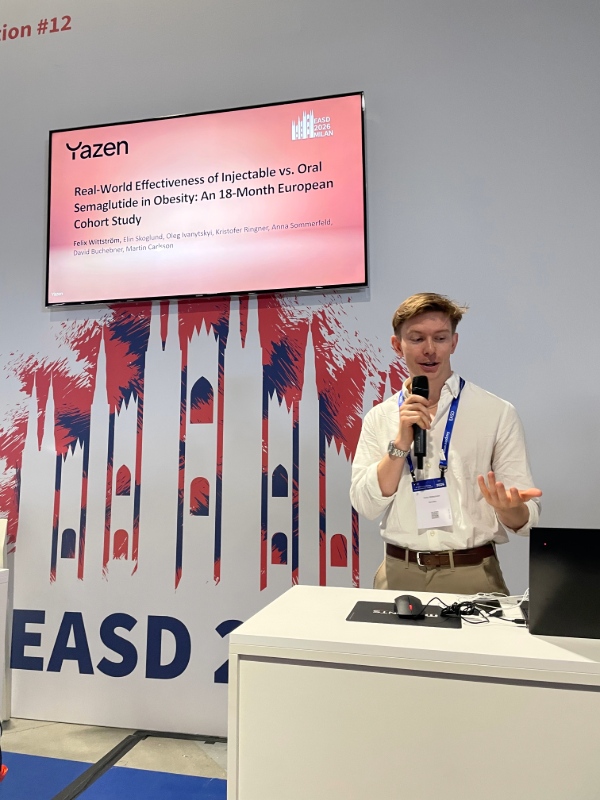
Crucially, our real-world evidence proves that digital healthcare can successfully engage traditionally underserved populations. In our scientific poster presented at the European Congress on Obesity, an analysis of over 40,000 Yazen patients revealed an incredibly diverse socioeconomic distribution as 35% of Yazen patients come from low-income occupational backgrounds, and 38% come from middle-income groups.
Remarkably, healthcare professionals themselves represent our largest single patient occupational category at 21.8%, with nurses and nurse assistants making up nearly three-quarters of that subgroup. When the very professionals who work within the traditional healthcare system choose private digital care to treat their own chronic disease, it underscores the profound need for accessible, structured models.
6. The Expanding Role of Employers
The summit identified employers as increasingly crucial stakeholders in metabolic health. Given the documented correlation between effective obesity treatment and reduced absenteeism, employers stand to gain a massive return on investment by shifting from superficial workplace "wellness initiatives" to meaningful healthcare coverage.
Our internal data heavily backs this up: our patient survey shows that 24% of Yazen patients report a significant reduction in sick leave, saving an average of 5.2 sick days per year, while 39% experience higher energy levels and improved productivity at work. Providing access to comprehensive obesity care is an investment in human capital, not an overhead cost.
7. The Importance of Patient Voices
A recurring theme throughout the summit was the need to move beyond talking about people living with obesity and instead ensure they are actively involved in shaping the conversation. Multiple speakers highlighted that lived experience remains underrepresented in policy discussions, healthcare design and public debate, despite patients being the people most affected by the disease and the barriers to treatment.
This was particularly evident during the panel discussion “Healthy Workforce: Cost or Investment?”, featuring Yazen patient Annest Dalby alongside Lars Hartenstein (McKinsey Health Institute) and Caroline Kristiansen (Novo). The discussion explored the impact of obesity and metabolic health on workforce participation, productivity, absenteeism and long-term economic outcomes, while reinforcing the case for viewing obesity treatment as an investment rather than a cost.
When asked how it feels when you move from survival mode to productive mode, Yazen patient Annest answered, “It’s been a long time so I see that point in time as a previous person. The change has been quite gradual and not without its challenges. I’m definitely more confident and saying yes to more opportunities, I certainly wouldn’t have been doing a panel like this three years ago! My overall attitude towards experiences has been more positive. More confident to walk in a room, more confident to stand up and give a presentation. I’m confident in my career but now have 360 confidence and less noise. I’m not worrying if people are looking at the way my body looks. It’s not been without challenges but overall it’s been an extremely positive journey and experience.”
We were especially proud that Yazen was one of the few summit sponsors to ensure the patient perspective was represented on stage through the participation of a Yazen patient on the panel. Their contribution brought a valuable real-world perspective to the discussion, helping to illustrate the day-to-day realities of living with obesity, navigating treatment, and balancing health with work and family life. Their voice reinforced one of the summit’s clearest messages: effective obesity care must be designed with patients, not just for patients.
The inclusion of lived experience alongside policymakers, clinicians and industry leaders demonstrated the growing recognition that patient perspectives are essential to developing effective, equitable and sustainable obesity care pathways.
Moving Forward: From Moralisations to Evidence
The Economist Summit in Brussels made one reality abundantly clear: the medical revolution to treat obesity is already here, and there is much to celebrate. However, our societal attitudes, reimbursement models, and care pathways are lagging behind.
Without subventions or integrated, multidisciplinary care models, we risk cementing an economic divide where only the wealthy can afford treatment for a chronic condition, forcing lower-income patients to discontinue effective care prematurely due to financial strain.
At Yazen, we will continue to use our real-world data from over 47,000 treated patients to push for equity, dismantle systemic stigma, and prove that sustainable health outcomes are achieved when you treat the whole person, not just the number on the scale.
For more information on Yazen’s real-world clinical data or to read our complete study abstracts from ECO 2026, please head to Yazen.com