UK firms eye GLP-1 benefits to cut sick leave and boost performance.
UK employers are increasingly considering weight-loss support as part of employee benefits, as new Yazen patient data links GLP-1 treatment to reduced sick days and improved workplace performance.


Weight-loss medications are increasingly on the radar as a potential employee benefit.
Weight-loss medications are increasingly on the radar as a potential employee benefit. With a significant proportion of UK adults classified as clinically obese or overweight, these treatments are moving from fringe health topics into mainstream discussion among workers and HR leaders.
According to recent research from Howden Employee Benefits, more than a quarter of employees have used these medications, and over 40% believe employers should include access to them within company health offerings.
While few organisations currently provide coverage for weight-loss drugs, many HR experts expect this to change over the next few years.
Yazen’s Oliver Willacy spoke to HR Grapevine, saying: “We’re running a pilot project with our first large employer and are exploring how to expand our provision and support model. I have no hesitation in predicting that within the next five years, weight-loss support will be an integral part of employee benefit programmes. It’s that seismic. The obesity landscape will change dramatically.”
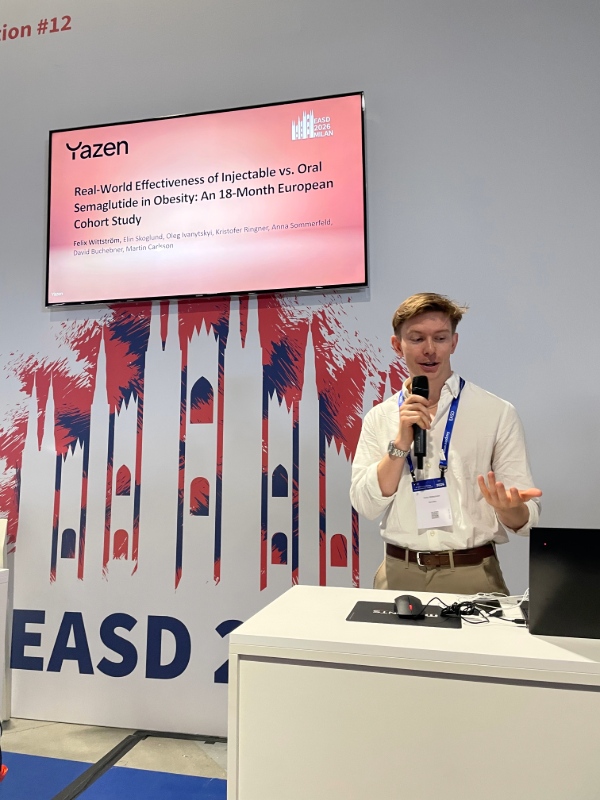
A Yazen study published earlier this month analysed wellness data from 1,351 patients across Europe. Nearly a quarter (24%) of those on GLP-1 medication reported fewer sick days, with the average patient avoiding 5.2 days per year. In addition to this quantitative data, qualitative findings showed that nearly half (46%) felt more energetic at work; 19% said their performance improved; 14% reported enjoying their work more; and 12% said they looked forward to going into the office and attending meetings.
One of the biggest barriers to firms adopting access to weight-loss medication for employees is cost. “There’s no doubt that at the moment the drugs are expensive per head, but that’s because there are currently only one or two major pharmaceutical providers,” says Willacy. “We already know this number will soon expand to six or seven as patents imminently lapse. There is also significant progress being made in providing the medication in tablet form rather than injections. When tablets become available, this will substantially reduce the cost.”
Willacy adds: “Our patients receive more than just access to medication through our full-stack offer, including a personal doctor and a team of coaches such as a dietitian and psychologist. Research shows this holistic model produces better and more sustainable results than medication alone.”
He also notes that once patients reach their target weight, dosage levels can be reduced to maintenance levels. “This means costs — currently employers’ biggest concern — can come down dramatically, by up to 50% per head or more.”
Addressing market complexity, Willacy explains that Yazen is exploring shared-cost models. “There are typically three beneficiaries — employees, employers, and health insurance providers, who can de-risk employees and potentially face fewer ill-health payouts. We’re looking at a model that distributes costs across all three.”
We may be approaching a point where employers can no longer ignore obesity and its associated health impacts.
Willacy concludes: “I don’t believe it will be seen as stigmatising to offer something that could genuinely help people, provided it’s voluntary and available to those who choose it. Over time, it will become part of the standard employee benefits suite.”
Read the full article on HR Grapevine:
👉 https://www.hrgrapevine.com/content/article/2026-02-26-weighing-up-weight-loss-benefits-provision