
The Obesity Care Gap in Spain: Stigma, Delays in Accessing Care and the Potential of Digital Obesity Care (146)
Anna Sommerfeld1, Carlos Andrés Cáceres Cediel¹˒², Gema Medina-Gómez³˒⁶, Diego Bellido⁴˒⁶, María M. Malagón⁵˒⁶, Martin Carlsson¹˒⁷
1. Yazen Health AB, Malmö, Sweden
2. Department of Neurology, Sahlgrenska University Hospital, Gothenburg, Sweden
3. Department of Basic Health Sciences, Rey Juan Carlos University, Alcorcón, Madrid, Spain
4. Department of Endocrinology and Nutrition, University Hospital Complex of Ferrol (CHUF), Ferrol, Spain
5. Maimonides Biomedical Research Institute of Córdoba (IMIBIC), University of Córdoba, Reina Sofía University Hospital, Córdoba, Spain
6. Spanish Society of Obesity (SEEDO), Madrid, Spain
7. Department of Medicine and Optometry, Linnaeus University, Kalmar, Sweden
INTRODUCTION
Obesity is a chronic disease that needs long-term, multidisciplinary care. Yet people living with obesity still face weight stigma, limited recognition of obesity as a disease and barriers to the right care.
Digital care may make specialised treatment easier to reach. But little is known about how people with obesity in Spain see their own disease, their care pathway and telemedicine.
We set out to explore perceptions of obesity, its impact on daily life, stigma, treatment-seeking, attitudes towards anti-obesity medication (AOM) and multidisciplinary care, and views on telemedicine among adults living with obesity in Spain.
METHODS
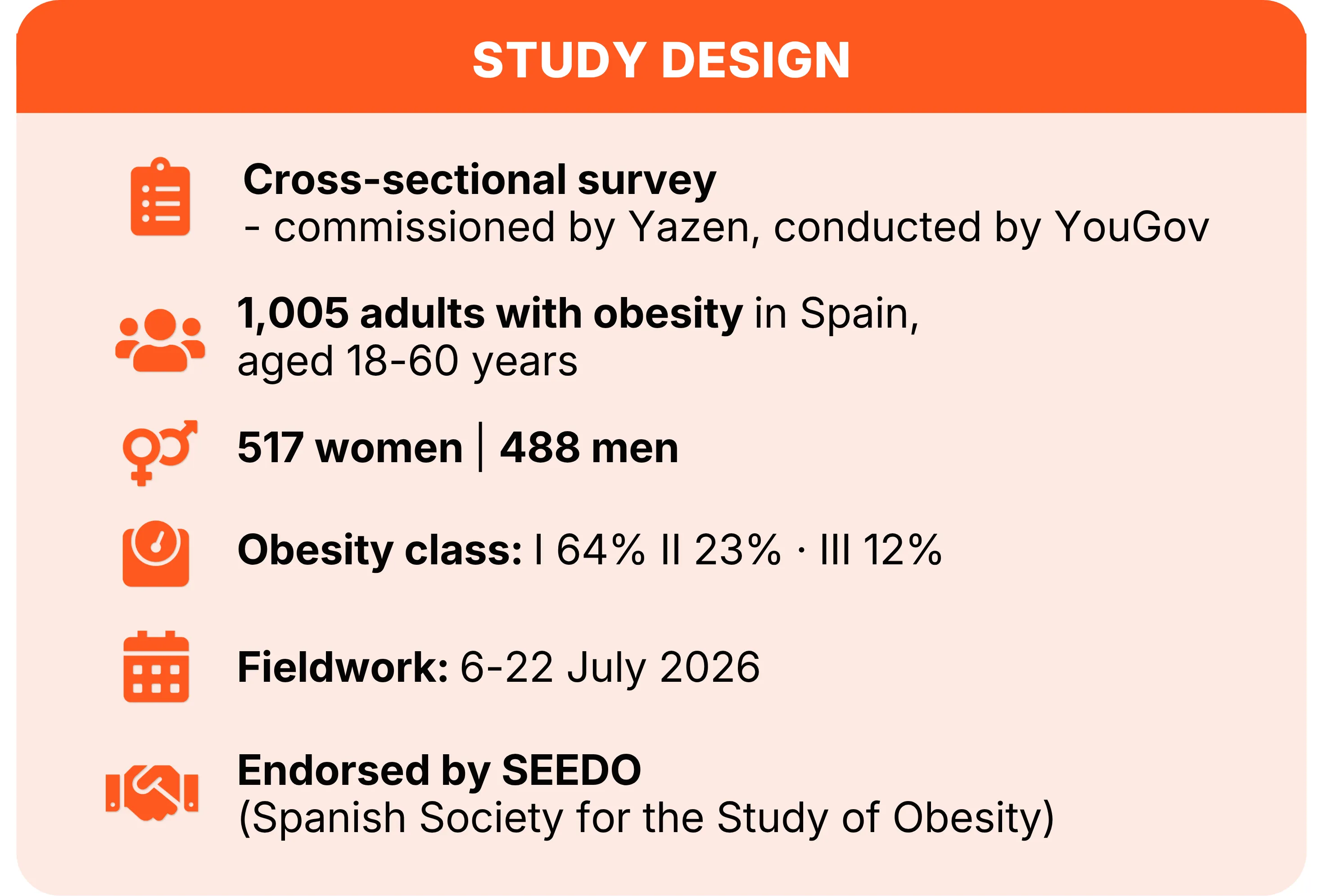
This cross-sectional survey was commissioned by Yazen Health and conducted by YouGov from 6–22 July 2026. It included 1,005 adults aged 18–60 in Spain, all meeting criteria for obesity: 64% class I, 23% class II and 12% class III. Participants were 517 women and 488 men.
The questionnaire covered perceived causes of obesity, whether obesity is recognised as a disease, quality of life and mental health, weight-related discrimination, the care pathway, willingness to use newer AOMs, the value of a multidisciplinary team and experiences of telemedicine.
Results are presented as proportions. Differences by sex and age were tested at the 95% significance level. Care-pathway measures refer to the 689 participants who had sought professional help
conducted by YouGov in July 2026
RESULTS
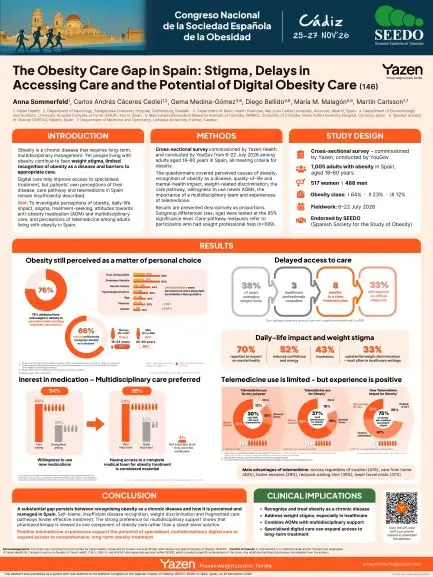
Obesity is still seen as a personal choice. 76% attributed their weight to unhealthy habits resulting from their own choices. Poor eating habits and a sedentary lifestyle were each ranked among the top three causes by 69%, compared with 44% for genetics. 66% said obesity is not sufficiently recognised as a disease in Spain, more often women (71%) than men (62%).

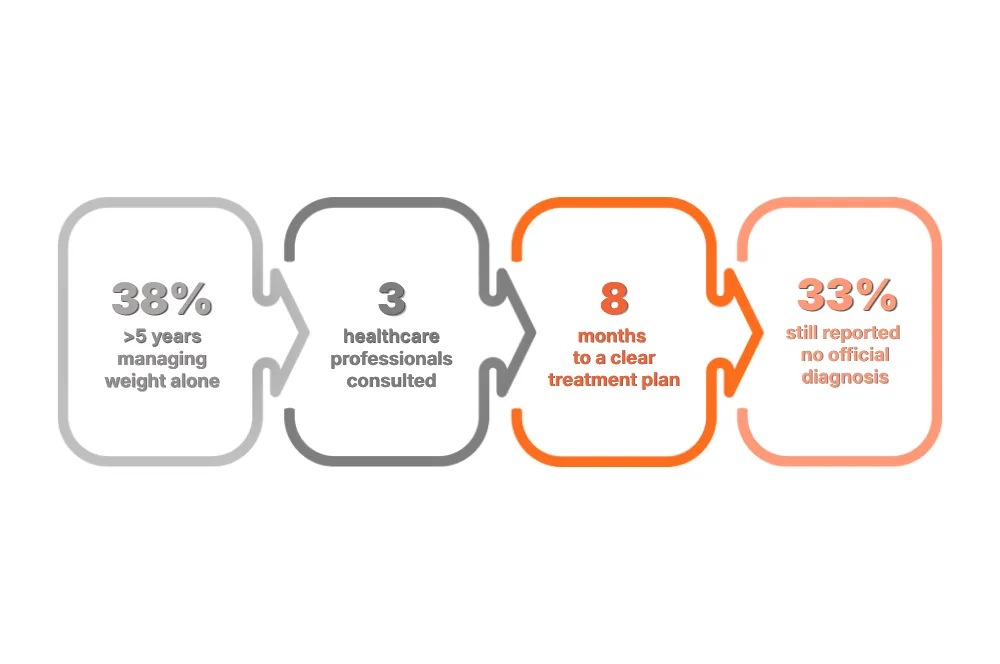
Care comes late and the pathway is fragmented. 38% had managed their weight alone for more than five years before seeking help. Those who sought help consulted 2.87 healthcare professionals on average and waited 8.12 months for a clear treatment plan. 33% still had no official diagnosis.
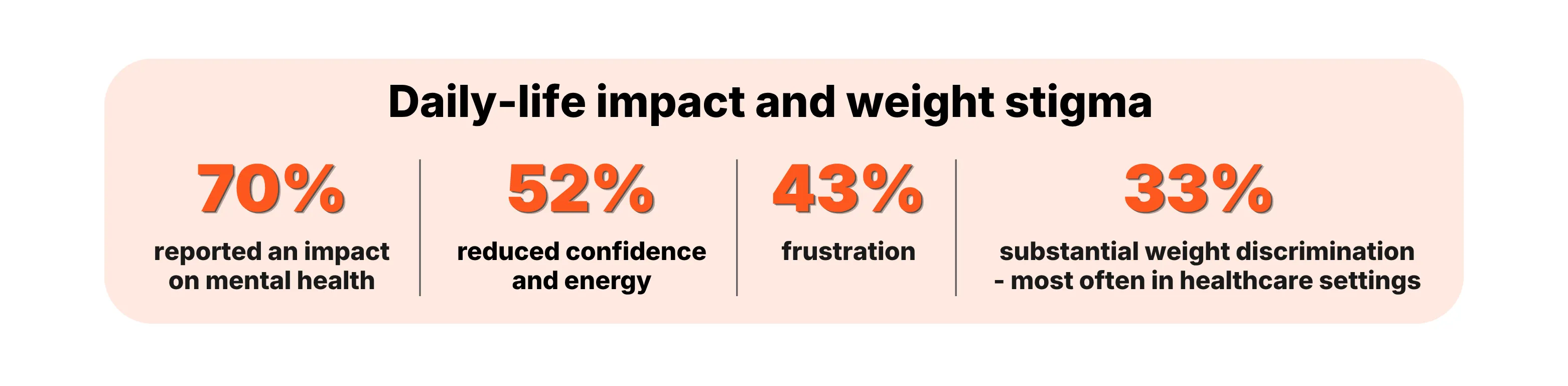
Obesity affects daily life and mental health. The most common impacts were reduced confidence and energy (52%) and frustration (43%); 70% reported an impact on mental health. Healthcare settings were the most common source of weight-related discrimination, and 33% had experienced substantial discrimination.
Interest in medication, but a team is preferred. 54% were very willing to use newer AOMs. 85% said access to a complete medical team (doctor, dietitian, psychologist and health coach) alongside medication was important. Only 4% considered this unimportant and wanted medication alone.
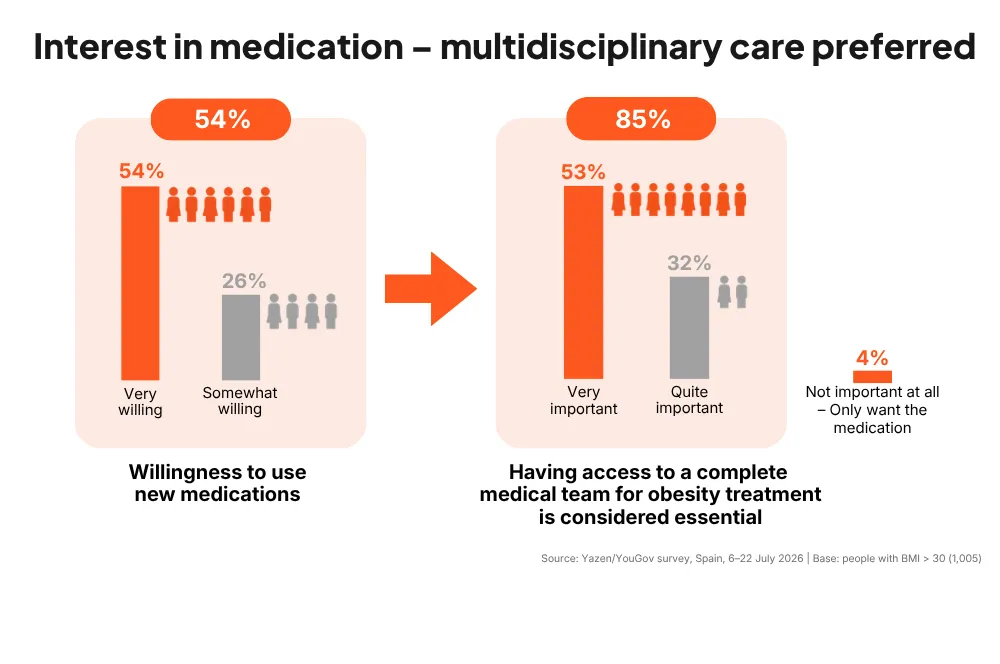
while only 4% wanted medication alone
Telemedicine use is limited but positive. 30% had used telemedicine for any health purpose and about 11% specifically for overweight or obesity. Of these, 75% said it had helped. The main advantages were access regardless of location (41%), care from home (40%), faster answers (39%), shorter waiting times (39%) and lower travel costs (37%).
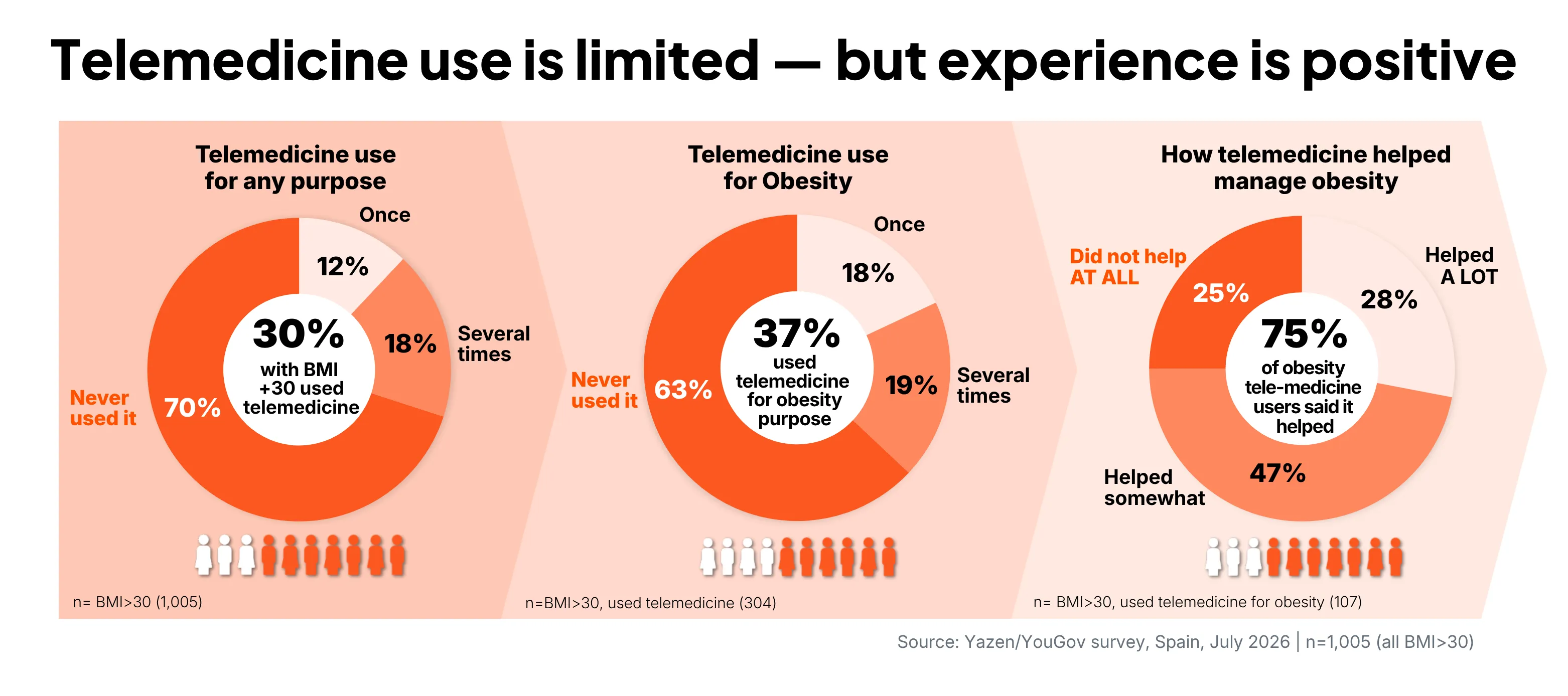
mainly thanks to access regardless of location and care from home
CONCLUSION
A substantial gap persists between recognising obesity as a chronic disease and its perception and management in Spain.
Self-blame, insufficient disease recognition and discrimination hinder effective care. The preference for multidisciplinary support indicates that pharmacotherapy is viewed as one component of obesity management rather than a stand-alone solution.
Positive telemedicine experiences support the potential of specialised, multidisciplinary digital care to expand access to comprehensive, long-term treatment.
Obesity is still seen as a personal choice, not a chronic disease.
Patients want a whole care team, not just a prescription.
The findings support:
- Recognising and treating obesity as a chronic disease
- Tackling weight stigma, especially in healthcare
- Combining anti-obesity medication with multidisciplinary support
- Specialised digital care to widen access to long-term treatment
Acknowledgements: The study was commissioned and funded by Yazen Health, conducted by YouGov andscientifically endorsed by the Spanish Society of Obesity (SEEDO).
Conflict of interest: A. Sommerfeld, C.A. Cáceres Cediel and M. Carlsson are employees of Yazen Health; M. Carlsson is also a co-founder of Yazen Health. D.B.G., G.M.-G. and M.M.M. hold leadership positions within SEEDO, which provided scientific endorsement of the study. Any additional individual disclosures are available from the authors.
Data source: Yazen/YouGov survey, Spain, 6–22 July 2026 (n=1,005 adults with obesity).
This article is based on a poster abstract presented at the SEEDO 2026 congress in Cádiz, Spain (poster defence, 26 November 2026). For questions, contact anna.sommerfeld@yazen.com.
Follow Yazen on LinkedIn for the latest Scientific Updates and News in the Obesity area.