Weight loss: advice and methods to lose weight
Losing weight can be simple in theory, but much harder in practice. Your weight is influenced by your body, lifestyle and environment, and sometimes changes to diet and physical activity may not be enough. With the right knowledge and support, you can give yourself a good chance of reaching a lower weight and maintaining it over time.

Weight loss


Insulin resistance in overweight and obesity
Insulin resistance means that the body's cells respond less effectively to insulin, which means the body needs to produce more insulin to keep blood sugar under control. The condition is closely linked to overweight, obesity and other metabolic risk factors and can make weight regulation more challenging.Despite this, weight loss can improve many risk factors. Healthy eating habits, regular physical activity, good sleep and other lifestyle habits can improve insulin sensitivity over time. For some people, medication can also complement lifestyle changes to make weight loss easier and improve metabolic health.

Lose weight after 50: how to succeed sustainably
Many people find that their weight changes after the age of 50, even if their lifestyle habits remain relatively unchanged. Hormonal changes, ageing, reduced muscle mass and changes in the body's energy balance can make it more difficult to lose weight and maintain the results over time. Women in particular often notice increased fat accumulation around the abdomen in connection with menopause. With the right diet, regular physical activity and medical support when needed, it is possible to achieve sustainable weight loss and improve both health and quality of life.

Weight loss and hormones: how biology affects body weight
Body weight is regulated by a complex interaction between hormones, the brain and other biological systems. These systems control hunger, fullness, energy expenditure and how the body stores energy, among other things. This is why weight loss is about much more than willpower or discipline.
Weight loss and stress
Long-term stress can affect both the body and our lifestyle habits in ways that make it more difficult to lose weight. Research suggests that stress can contribute to increased abdominal fat, poorer metabolic health and greater challenges in maintaining healthy habits over time. By understanding the connection between stress, sleep, recovery and weight, it may become easier to create the right conditions for sustainable weight loss.

How sleep affects your weight loss
Sleep plays an important role in weight regulation. Too little sleep can affect hormones that regulate hunger and fullness, increase susceptibility to stress and make it more difficult to maintain healthy lifestyle habits. Many people also experience increased hunger, greater cravings for energy-dense foods and lower motivation for physical activity when they do not get enough sleep.
Good sleep is therefore an important part of a sustainable lifestyle and can create better conditions for long-term weight loss.

Common mistakes when losing weight: how to break the patterns
Many people trying to lose weight encounter obstacles along the way, despite strong motivation and considerable effort. Common pitfalls include unrealistic goals, overly restrictive diets and habits that are difficult to maintain over time. At the same time, weight loss is influenced by the body's biology around hunger, fullness and energy balance, which can make it challenging both to lose weight and maintain the results. Here, we look at some of the most common mistakes when losing weight and how you can create more sustainable strategies for long-term health.

How long does it take to lose weight - and what affects the rate?
How long it takes to lose weight varies between individuals and is influenced by factors such as starting weight, body composition, genetics, hormones and lifestyle habits. Sustainable weight loss usually happens gradually over time. In this guide, we explain what affects weight loss and how lifestyle changes and medical treatment can contribute to sustainable results.

Why is it difficult to lose weight? The medical explanation
For many people, losing weight and maintaining a lower weight over time is more complex than simply eating less and moving more. Body weight is regulated by biological systems that control hunger, fullness, energy expenditure and fat storage. When the body loses weight, mechanisms are activated that aim to restore energy balance, which can make long-term weight loss more challenging.

Lose weight during menopause - understand the changes and find the right strategy
The body changes throughout life, and for women, menopause is a natural transition that can affect health, wellbeing and body composition. Many women find that it becomes more difficult to maintain their weight or lose weight during menopause. Hormonal changes can affect body composition, appetite regulation, energy balance and fat distribution. Although many women experience new challenges during this period, there is a lot you can do to feel better and maintain good health.

Losing weight after pregnancy: support for a sustainable recovery
After pregnancy, the body goes through major changes, and how quickly weight changes varies from person to person. Hormones, sleep, recovery, breastfeeding and lifestyle habits can all affect changes in weight. For many people, the period after giving birth is not only about weight loss, but also about recovering and finding sustainable routines in everyday life. For people living with overweight or obesity, personalised support can contribute to sustainable weight loss and improved health over time.

Lose weight with medication: Medical treatment for weight loss
Modern weight loss medicines are a treatment option for overweight and obesity that work, among other things, by affecting the body's biological appetite and fullness signals. Overweight and obesity are influenced by complex biological, hormonal and metabolic factors. With the right treatment, the conditions for sustainable weight loss can be improved, while reducing the risk of related health conditions.

Lose weight sustainably: How to reduce the risk of yo-yo dieting
Sustainable weight loss is about more than quick diets and temporary results. Overweight and obesity are influenced by biological systems that regulate hunger, fullness and energy expenditure, which can make it difficult to maintain a lower weight over time.
For many people, a combination of long-term lifestyle habits, regular physical activity, good sleep and, in some cases, medical treatment is therefore needed to achieve sustainable results. Modern weight loss medicines can provide support by affecting appetite and fullness, which can make it easier to follow healthy habits over time.

Lose weight quickly: what does the research say about rapid weight loss?
Many people want to lose weight quickly, but the real challenge is often keeping the weight off over time. Rapid weight loss can provide motivation and early health benefits, but maintaining the results usually requires long-term lifestyle changes. Here, we look at what the research says about rapid and gradual weight loss, and how diet, physical activity, behavioural changes and, where needed, medical treatment can contribute to both effective and sustainable weight loss.

Lose weight: how to make it work for you
Losing weight involves creating a long-term energy deficit, where your body uses more energy than it takes in. At the same time, overweight and obesity are influenced by biological, hormonal and genetic factors that can make weight loss difficult to maintain over time.Sustainable weight loss therefore often involves a combination of healthy eating habits, regular physical activity and long-term lifestyle changes. For some people, medical treatment can also provide support with regulating hunger and appetite.

Meet our patients




“ I just can't believe now, looking back, that I tried so many times and now I'm here. I reached my goal with the support of Yazen… it's just been an incredible journey."
Gemma Collins: "I’ve lost 22 kilos and kept it off with Yazen - it feels so good!”
"Nothing can stop me now!"
Tailored treatment. Personal support. Better results.
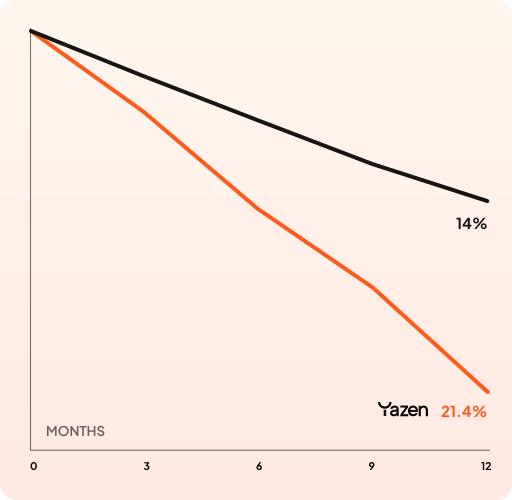
The most successful treatment combines medical weight loss with a personalised plan, lifestyle guidance and continuous support. That's why Yazen patients achieve greater weight loss and sustainable results.