
.webp)

Real-World Effectiveness of Injectable vs Oral Semaglutide in Obesity: An 18-Month European Cohort Study (A-26-3058-EASD)
Felix Wittström1, Elin Skoglund1, Oleg Ivanytskyi1, Kristofer Ringner1, Anna Sommerfeld1, David Buchebner1, Martin Carlsson1,2
1. Yazen Health AB, Malmö, Sweden
2. Department of Medicine and Optometry, eHealth Institute, Linnaeus University, Kalmar, Sweden
BACKGROUND AND AIM
Evidence comparing the long-term real-world effectiveness of injectable and oral semaglutide for obesity is limited, particularly at doses lower than those tested in clinical trials.
This study compared 18-month weight loss, changes in central adiposity and metabolic biomarker trajectories between the two formulations in a large European cohort receiving incretin-based therapy combined with a structured lifestyle intervention.
METHODS
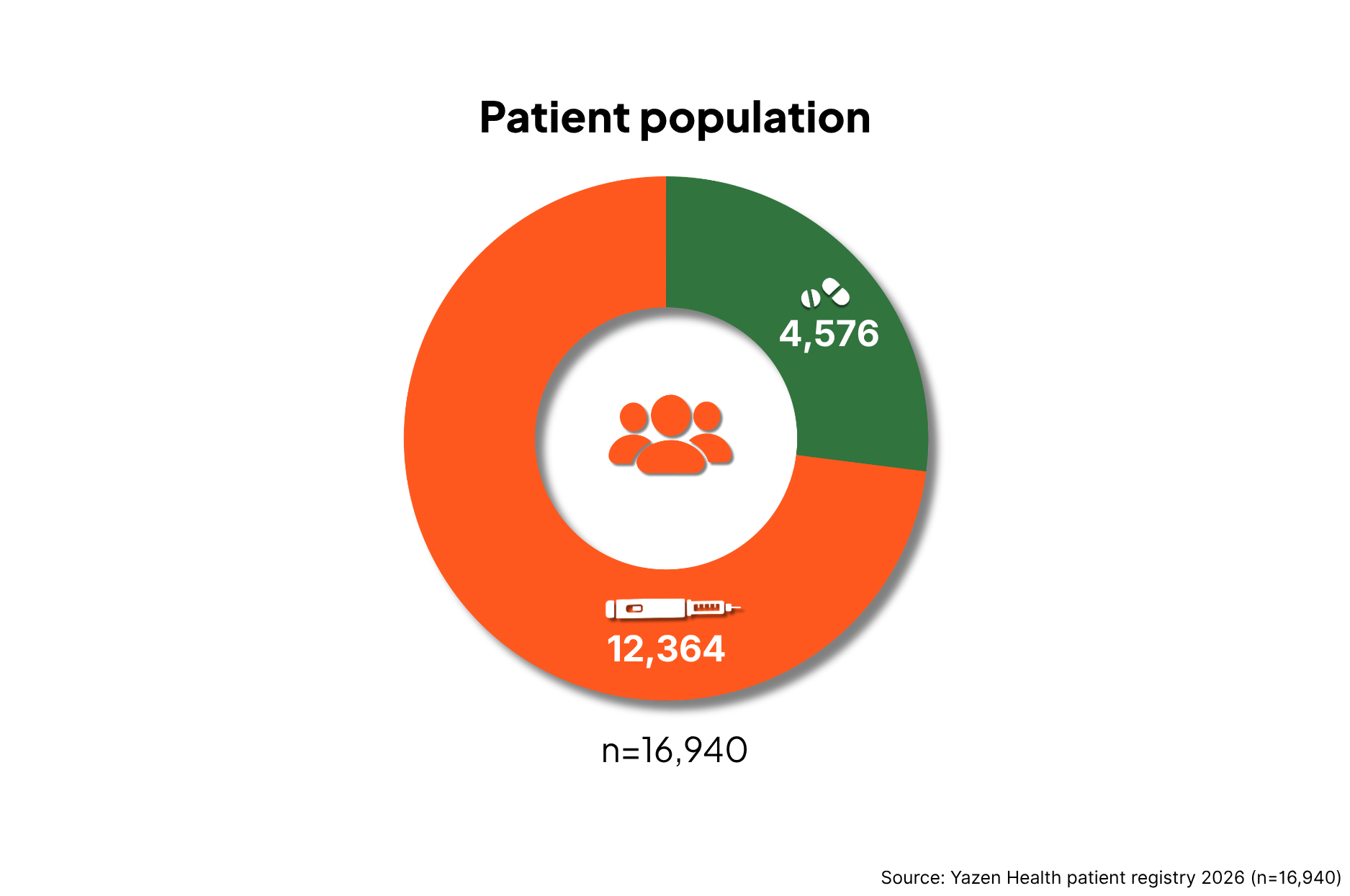
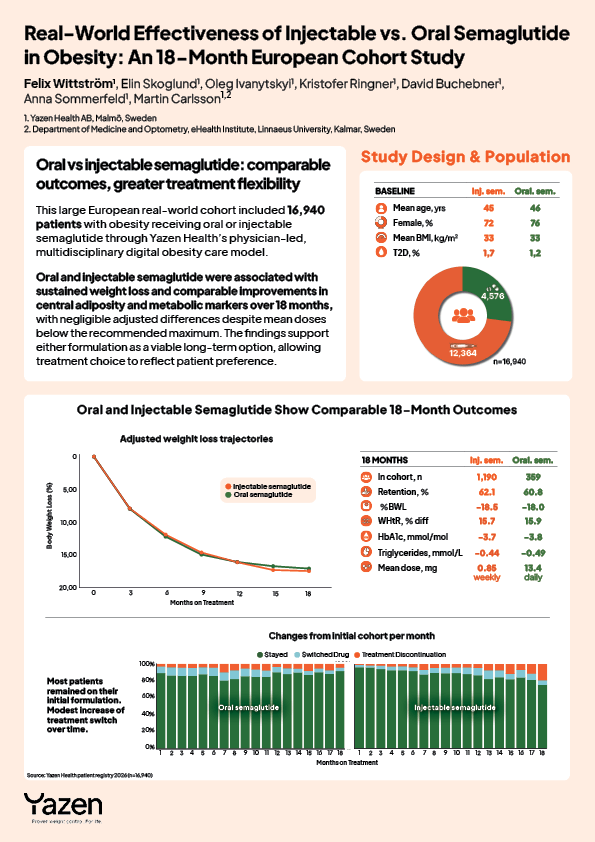
We analysed electronic health records from 16,940 patients with obesity who initiated injectable semaglutide (n=12,364) or oral semaglutide (n=4,576) at a comprehensive digital obesity care provider between 1 January 2024 and 31 March 2026.
Patients remained classified as users of their initial formulation until switching to another incretin therapy or formulation, discontinuing treatment at the clinic or reaching the end of the study period.
The primary endpoint was mean percentage body weight loss at 18 months, with weight self-reported weekly. Secondary endpoints included waist-to-height ratio, self-reported monthly, and HbA1c and triglycerides measured at baseline, 9 months and 18 months.
Linear mixed-effects models adjusted for baseline age, sex, BMI and diabetes status. Treatment retention was defined as patients remaining on any incretin therapy after starting oral or injectable semaglutide.
RESULTS
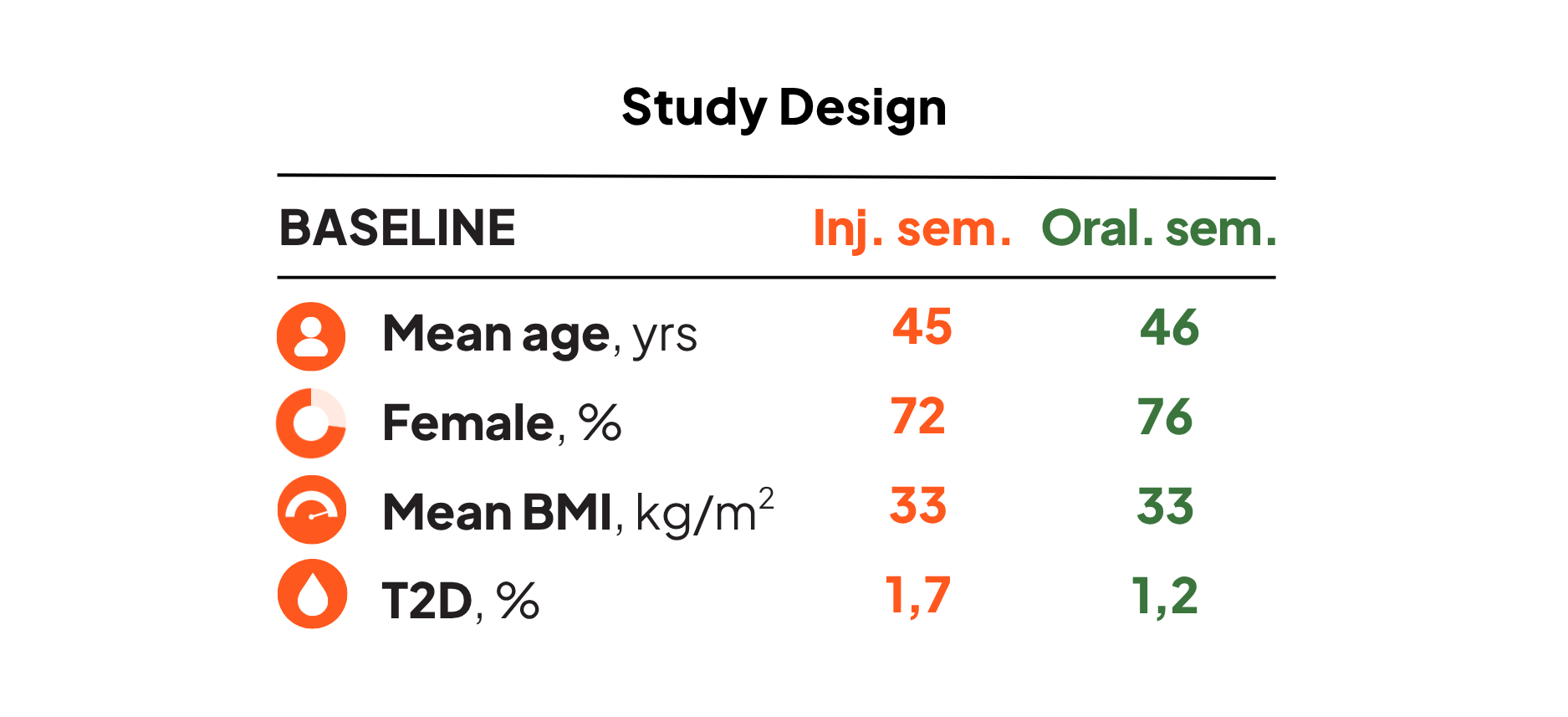
At baseline, the injectable and oral cohorts were similar:
- Mean age: 45 versus 46 years
- Women: 72% versus 76%
- Mean BMI: 33 versus 33 kg/m²
- Diabetes: 1.7 versus 1.2%
Due to treatment switching or the end of the study period, 1,190 patients in the injectable cohort and 359 patients in the oral cohort contributed formulation-specific data at 18 months. Mean doses at this point were 0.85 mg weekly for injectable semaglutide and 13.4 mg daily for oral semaglutide.
At 18 months:
- Treatment retention was 62.1% in the injectable cohort and 60.8% in the oral cohort
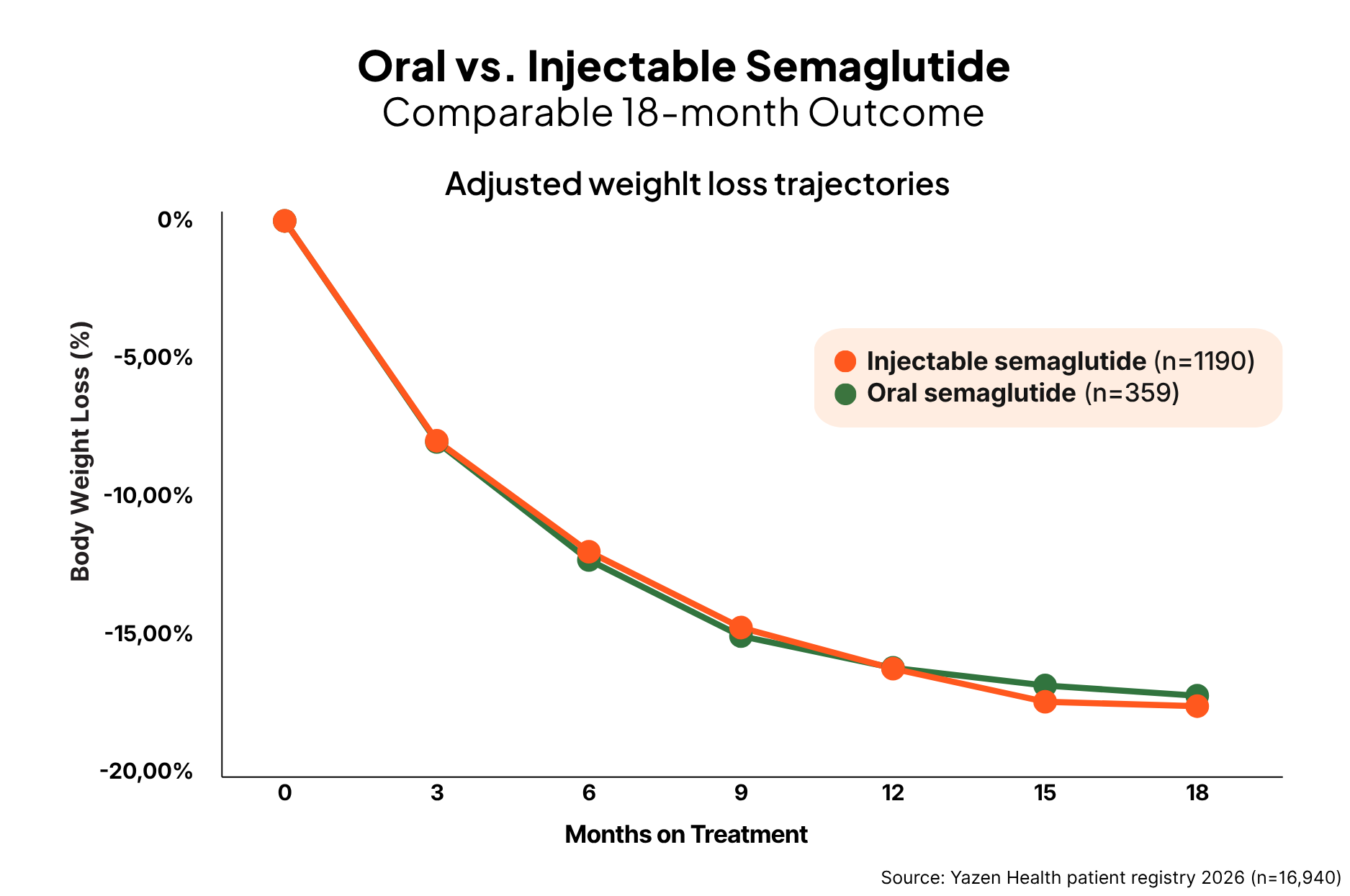
- Mean body weight loss was 18.5% (SD 7.7%) with injectable semaglutide and 18.0% (SD 7.0%) with oral semaglutide
- The adjusted difference in body weight loss was −0.41 percentage points (95% CI −0.78 to −0.06)
- Mean waist-to-height ratio decreased by 15.7% and 15.9%, respectively
- Mean absolute HbA1c changes were −3.7 and −3.8 mmol/mol
- Mean triglyceride changes were −0.44 and −0.49 mmol/L
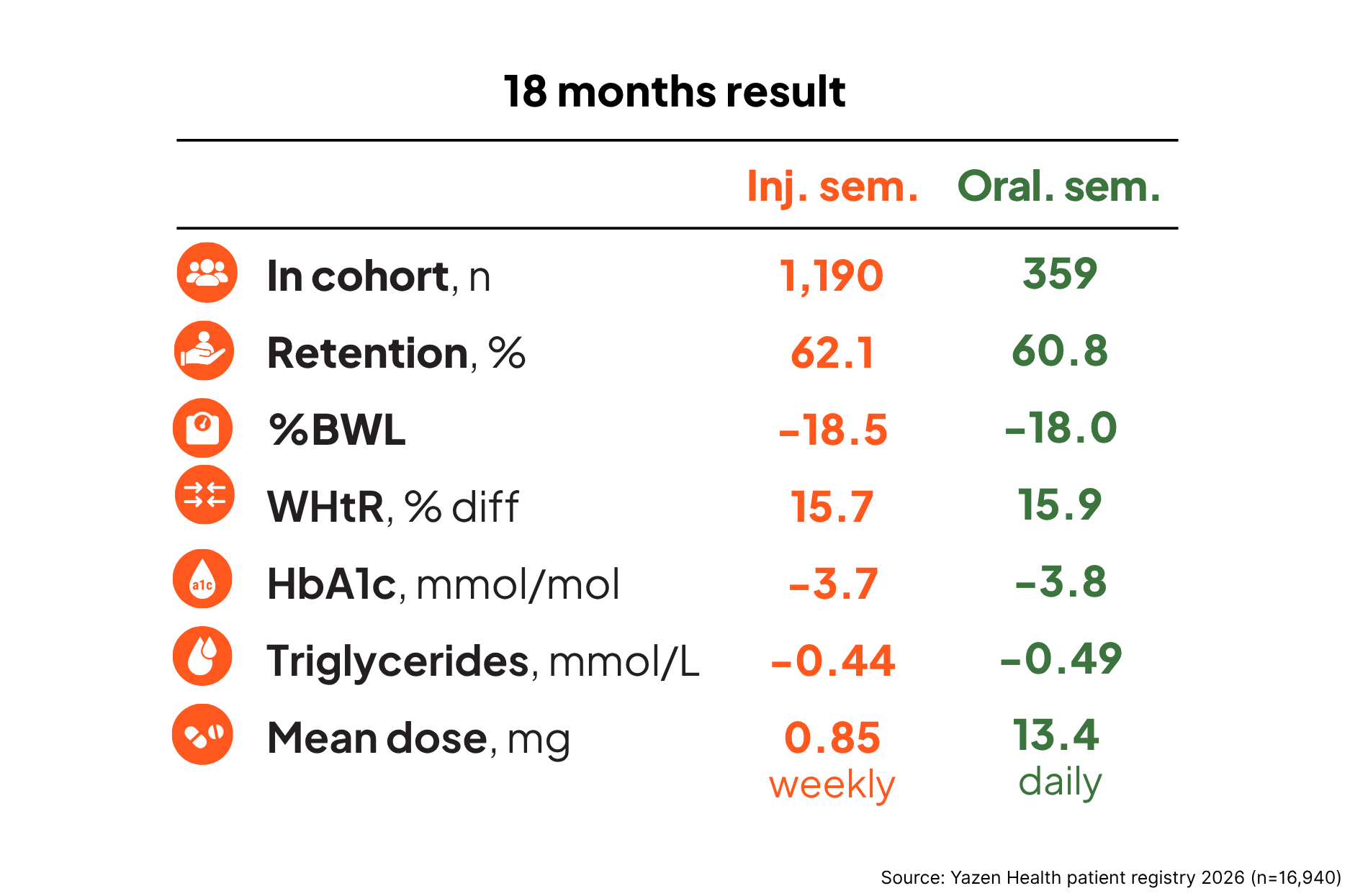
Adjusted analyses found negligible differences between the groups for central adiposity and metabolic outcomes.
.webp)
Adjusted weight-loss trajectories were nearly identical for oral and injectable semaglutide at 18 months
CONCLUSION
In this large real-world cohort of patients initiating semaglutide within a comprehensive digital obesity care setting, both formulations produced clinically relevant weight loss, reduced central adiposity and improved metabolic markers over 18 months.
Mean doses remained below the maximal doses approved for obesity. Differences between oral and injectable semaglutide were negligible, supporting both formulations as viable treatment options.
KEY FINDINGS
- Injectable and oral semaglutide produced comparable weight loss at 18 months
- Mean body weight loss reached 18.5% and 18.0%, respectively
- Both formulations were associated with similar reductions in central adiposity
- Improvements in HbA1c and triglycerides were comparable between the groups
- Treatment retention was approximately 61% in both cohorts
- Mean doses remained below the maximal doses approved for obesity
These findings support:
- Individualised selection of semaglutide formulation
- Consideration of patient needs and treatment preferences
- Greater flexibility within long-term obesity care
- The use of comprehensive multidisciplinary support alongside pharmacotherapy
This abstract was presented by MD and researcher Felix Wittström, as an oral presentation on the annual meeting of the European Associations for the study of Diabetes in Milan, EASD 2026.
For scientific enquiries, please contact felix@yazen.com
.webp)
MD and researcher at Yazen Health
Follow Yazen on LinkedIn for the latest Scientific Updates and News in the Obesity area.
.svg)
.svg)